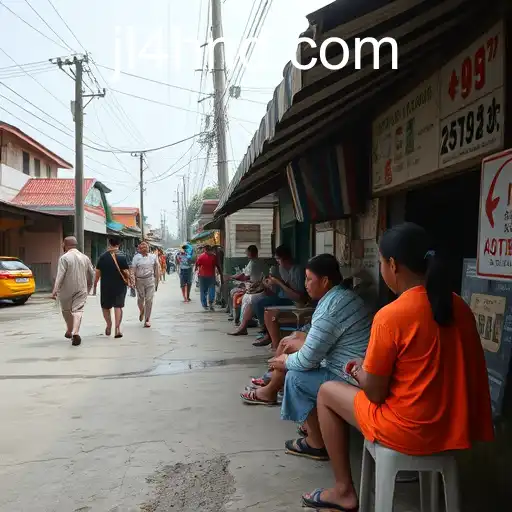
The Cultural and Economic Impact of Jueteng: A Deep Dive into the Popular Illegal Numbers Game
Jueteng is a well-known, centuries-old underground lottery game deeply ingrained in the culture of the Philippines. While illegal, this numbers game is played widely across the country, from urban centers to rural areas, attracting a diverse array of participants. Despite legal efforts to eliminate the practice, it continues to thrive and embed itself in the everyday lives of many Filipinos.
The Historical Roots of Jueteng
The origins of jueteng can be traced back to the colonial period, introduced into the country through Chinese immigrants. Influenced by traditional Chinese lottery games, the evolution of jueteng is a reflection of the Philippines' colonial history and cultural assimilation. Over time, it transformed into an indigenous gaming system, adapting uniquely Filipino characteristics while maintaining its foundational elements.
The game gained prominence during the Spanish colonial period, providing communities with a form of entertainment amidst the rigid constraints of colonial rule. Despite the presence of numerous laws banning it, jueteng adapted and persisted, a testament to its deep-rooted appeal in Filipino society. It's widely considered a mainstay, not just as a recreational activity but as a potential avenue for economic mobility, for local communities.
Understanding Jueteng: How It’s Played
Jueteng operates predominantly through street-level agents known as kubradores and their supervisors, the cabos. These operators facilitate the betting process, collecting wagers from players and frequently updating the results of the draws. Typically, bettors choose a two-number combination from 1 to 37. Winning numbers are drawn using various methods, including manually from a container or through more advanced technologies in more urban areas.
This informal network of agents orchestrates jueteng through sophisticated webs of communication and trust, often with significant community ties that make the operations resilient against law enforcement. The game’s simplicity, coupled with the low-cost buy-in, makes it highly accessible and appealing across socio-economic classes, offering the allure of a large payout which often rivals state-sanctioned lotteries.
The Economics of Jueteng: A Double-Edged Sword
Jueteng represents a significant economic force in the informal sector. It can employ thousands, from kubradores to upper-level game managers, providing livelihoods in regions with limited job opportunities. For the players, while primarily offering a form of entertainment, the promise of winning provides a glimmer of hope and a potential escape from poverty.
Despite this seemingly positive economic influence, jueteng poses considerable challenges. It perpetuates a cycle where money circulates within an illegal framework, often undercutting legal economic systems, such as the Philippine Charity Sweepstakes Office (PCSO), which operates government-regulated lotteries. The integration of jueteng into the societal fabric also means that local economies are partially reliant on an illegal enterprise, which could be detrimental in the long run.
The Political Landscape Surrounding Jueteng
Jueteng’s entanglement with politics further complicates its cultural and economic role. History has shown various scandals linking local and national politicians with jueteng operators, allegations of payoffs, and protection rackets. Political clans often exploit jueteng networks to foster patronage, secure voter loyalty, and sustain political dynasties.
Efforts to curb jueteng have often floundered due to these entrenched interests. Legislation and policing are regularly criticized for being ineffective or, in worse cases, complicit, with corruption hindering efforts to dismantle networks. This reality underscores a broader issue of corruption within public institutions, as the fight against jueteng becomes intertwined with broader governance and rule of law challenges in the country.
Cultural Significance and Social Implications
Beyond its economic and political dimensions, jueteng is a cultural phenomenon. It embodies elements of risk-taking and aspiration that resonate deeply within Filipino communities. For many, participation is as much about tradition and community bonding as it is about the potential financial rewards.
However, critics argue that jueteng reinforces negative social patterns, such as reliance on luck over hard work, potentially diverting motivation and resources away from productive economic activities. Additionally, it may exacerbate issues of poverty, where frequent losses disproportionately affect the already economically disadvantaged.
Addressing the Jueteng Dilemma: A Complex Issue
Addressing jueteng's implications remains a challenging task. Efforts need to besiege on multi-faceted fronts, balancing the intricate socio-economic and political fabric it intertwines within. Regulation and legalization are often discussed as potential avenues, proposing state control might allow for better oversight, diminishing illegal gains, and possibly redirecting revenue towards social programs.
Ultimately, any strategy must be sensitive to the cultural contexts and socio-economic conditions of the regions involved. Solutions must engage communities genuinely, acknowledging the game’s historical and present-day nuances while striving for a balance between eradication and adaptation in an ever-changing Philippine landscape.